Get Started
Complete the short form belowto Contact a Nexel Medical physician


Our bones are living, dynamic tissue constantly breaking down and rebuilding throughout life. This ongoing process depends heavily on hormonal balance. As we age, the natural decline of key hormones such as estrogen, testosterone, and human growth hormone (HGH) disrupts that balance, leading to gradual bone loss.
The result? An increased risk of osteoporosis, a disease that weakens bone structure and makes fractures far more likely. For both men and women, age-related hormonal decline is one of the most significant risk factors for osteoporosis. Fortunately, Hormone Replacement Therapy (HRT) can help restore hormonal equilibrium, rebuild bone density, and dramatically reduce fracture risk.
At Nexel Medical, our personalized HRT programs, including Testosterone Replacement Therapy (TRT) and Growth Hormone Therapy are designed to help patients protect their skeletal health, maintain strength, and prevent the debilitating consequences of bone loss.
Hormones act as the architects of bone structure. Among the most influential are human growth hormone (HGH), testosterone, and estrogen.
Together, these hormones sustain the delicate balance between bone formation and breakdown, a balance that weakens with age but can be restored through medically supervised HRT.
Hormone Replacement Therapy helps reverse or slow bone loss by restoring optimal hormone levels. HGH Therapy stimulates bone remodeling and regeneration, while TRT increases bone mineral density in men suffering from low testosterone. For women, estrogen and progesterone replacement following menopause can halt or even reverse bone loss.
These therapies not only prevent fractures but also improve muscle tone, balance, and coordination, three factors that play a major role in fall prevention. By addressing hormonal deficiencies directly, HRT provides a comprehensive approach to maintaining bone integrity throughout the aging process.
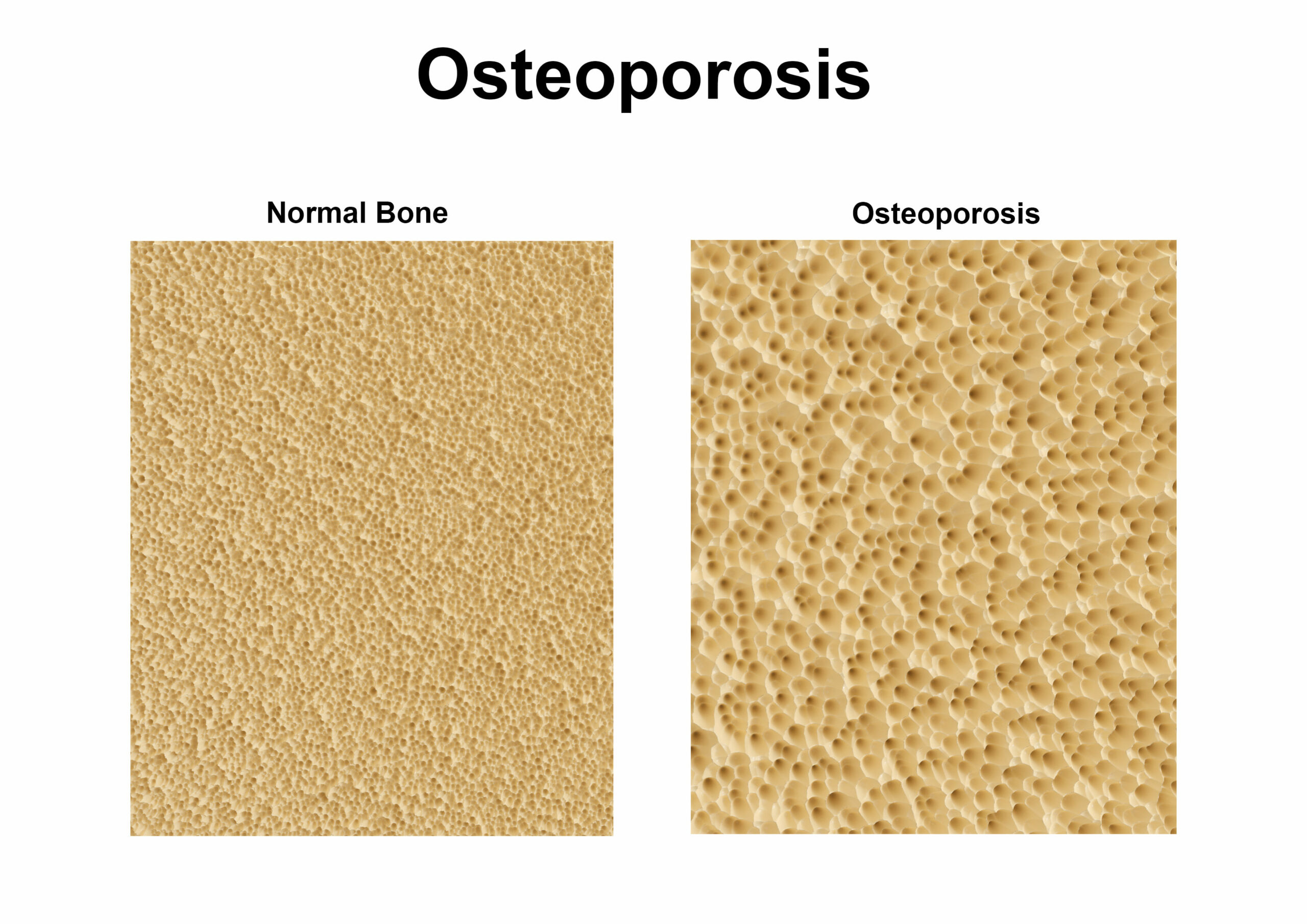
Osteoporosis is a chronic, progressive condition in which bones become porous, brittle, and fragile due to a loss of bone density. This condition affects an estimated 200 million people worldwide, leading to millions of fractures annually especially in the hips, spine, and wrists.
Osteoporosis is often called a “silent disease” because most people are unaware, they have it until they experience a serious fracture. For older adults, these fractures can be life-altering, often resulting in chronic pain, reduced mobility, and loss of independence.
By integrating hormone therapy into preventive care, patients can take proactive steps to safeguard bone strength long before a fracture occurs.
Human Growth Hormone is crucial to the renewal of nearly every tissue in the body including bone. As HGH levels decline with age, the rate of new bone cell production slows, resulting in weaker, less resilient bones.
Clinical research supports the use of HGH therapy for improving bone mineral density and reducing fracture risk. By stimulating osteoblast activity and promoting the release of Insulin-Like Growth Factor 1 (IGF-1), HGH enhances bone formation and accelerates the natural remodeling process.
This dual effect, building new bone while strengthening existing structures, makes HGH therapy a cornerstone of regenerative treatment for osteoporosis prevention.
An HGH deficiency limits the body’s ability to replace old bone tissue with new bone cells, leading to a gradual decline in bone mass. In both men and women, reduced HGH levels correlate with thinner cortical bone and weaker trabecular (spongy) bone, both of which are critical for preventing fractures.
In clinical studies, HGH replacement has been shown to improve bone geometry, increase bone mineral density, and enhance structural integrity. Postmenopausal women, in particular, experience notable gains in bone strength and reduced fracture risk when treated with HGH.
Yes. Multiple studies have confirmed that HGH therapy increases bone density by stimulating bone-building cells and accelerating the remodeling process. During adulthood, bone renewal naturally slows, but HGH can help restore youthful activity levels in bone metabolism.
Through enhanced osteoblast activation and IGF-1 production, HGH encourages thicker, stronger bones capable of withstanding greater mechanical stress key to preventing fractures in older adults.
Bone tissue exists in two forms: cortical bone (the hard outer layer) and cancellous bone (the spongy inner structure found in the spine, pelvis, and ribs). HGH therapy benefits both types.
Together, these effects make bones more resistant to stress and less likely to fracture during falls or impacts.
HGH not only strengthens bone but also improves the factors that indirectly reduce fracture risk. It promotes lean muscle mass, supports joint integrity, reduces fat mass, and enhances balance, which lower the likelihood of falls and injuries.
Studies have shown that adults treated with growth hormone maintain higher bone mineral content and have fewer fractures, even years after therapy has ended
Bone Loss and Menopause: The Role of Estrogen
Estrogen is one of the most powerful protectors of bone tissue. It regulates the rate of bone turnover by suppressing the activity of osteoclasts (cells that break down bone). When estrogen levels fall during menopause, bone resorption accelerates dramatically causing a rapid decrease in bone density.
Within the first five years after menopause, women can lose up to 20% of their bone mass, which significantly raises their fracture risk. This hormonal decline is the primary reason osteoporosis affects women at nearly double the rate of men.
Menopause marks the end of ovarian hormone production, including both estrogen and progesterone, creating a sharp imbalance that affects skeletal health. The bones become thinner, weaker, and more porous. This change doesn’t just affect the skeleton, it impacts posture, mobility, and overall vitality.
Lifestyle factors such as poor nutrition, lack of exercise, and vitamin D deficiency can further compound this risk. Without medical intervention, postmenopausal bone loss often continues unchecked, eventually leading to fractures that are difficult to heal.

Hormone Replacement Therapy for women restores the protective effects of estrogen and progesterone lost during menopause. Numerous studies have shown that HRT can:
By restoring hormonal balance, HRT not only strengthens bones but also contributes to better overall well-being improving mood, energy, and quality of life.
While often associated with male vitality, testosterone is also a key player in bone health. In men, testosterone stimulates bone formation and inhibits bone resorption, helping maintain skeletal integrity. Low testosterone known as hypogonadism, is a major contributor to osteoporosis in aging males.
Over time, the slow decline in testosterone results in thinner, weaker bones and a higher risk of hip, rib, and vertebral fractures. Fortunately, Testosterone Replacement Therapy (TRT) can restore optimal levels, improve bone mineral density and reduce fracture risk.
The landmark NIH Testosterone Trials (TTrials) found that one year of testosterone therapy significantly increased volumetric bone mineral density and estimated bone strength in men aged 65 and older.
Unlike the abrupt hormonal changes seen in menopause, men experience a gradual decline in testosterone starting around age 40. By age 65, many men have levels low enough to cause measurable bone loss. Studies confirm that low testosterone and low estradiol together are the strongest predictors of osteoporosis in men.
TRT not only improves bone density but also enhances lean muscle mass, balance, and coordination—all essential for fall prevention. In fact, research shows that men who receive testosterone therapy experience fewer fractures and a lower risk of falls compared to untreated men with low testosterone.
Yes. By restoring hormone balance, TRT helps prevent the bone thinning that leads to fractures. It strengthens both cortical and trabecular bone, enhances structural geometry, and supports muscle development to reduce fall risk.
Because osteoporosis can remain silent for years, men over 50 with symptoms of low testosterone such as fatigue, reduced strength, or loss of height—should undergo bone density testing. Early detection, combined with hormone optimization, offers the best defense against age-related bone decline.
Beyond bone health, HGH therapy supports a wide range of regenerative functions. Patients often experience:
By supporting multiple systems simultaneously, HGH therapy helps patients look, feel, and move younger—inside and out.
In addition to protecting bone density, TRT offers numerous anti-aging benefits, including:
These synergistic effects make testosterone therapy one of the most effective interventions for age-related decline in men.
If you are concerned about bone health as you age, or any of the issues caused by age-related hormone decline, Nexel Medical has the answers you are looking for. We take a a proactive approach to preserving bone health and preventing osteoporosis. Our specialists design individualized HRT programs including Testosterone Replacement Therapy, growth hormone injections and HRT for women, to restore balance, rebuild strength, and enhance vitality at every stage of life.
If you’re over 40 and concerned about bone loss or any symptoms of age-related hormone imbalance such as lack of energy, weight gain, or sexual performance issues, contact Nexel Medical today to schedule your comprehensive hormone evaluation and start building stronger bones and a stronger future!
Complete The Short Form Below To Contact a Nexel Medical Physician